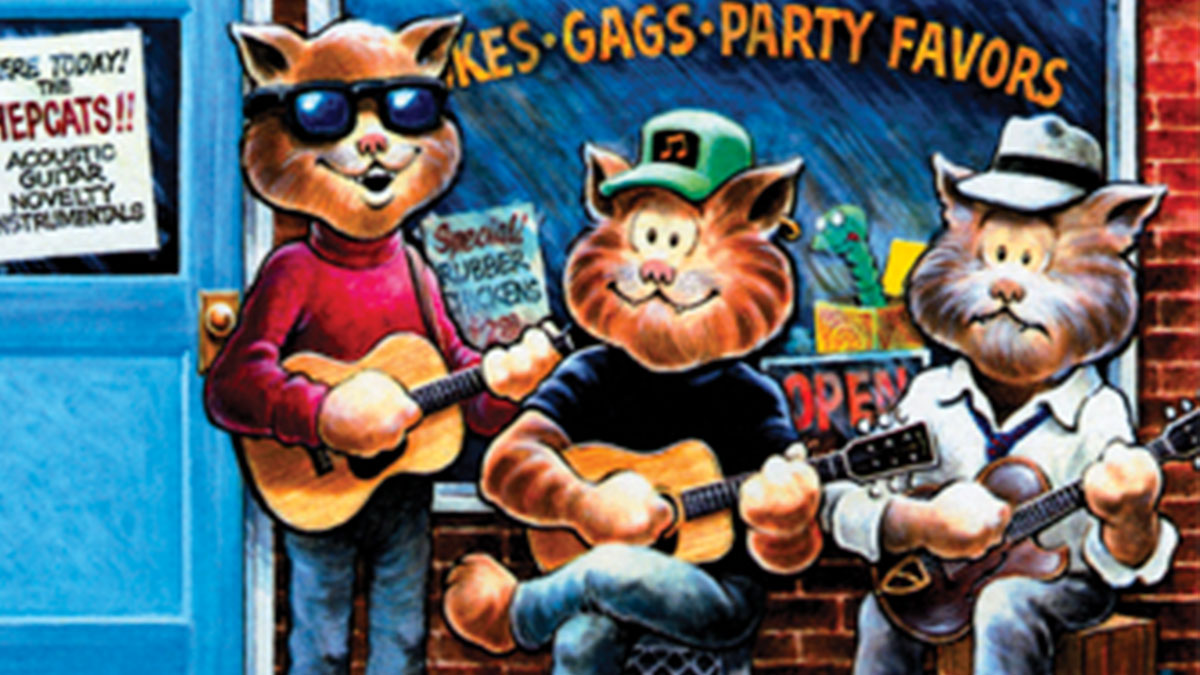
This isn’t live, there may not be an Ajax Novelty Company, and the three felines known as the Hepcats are actually the brainchild of Paul Johnson, whose Belairs were early-’60s pioneers of surf music. Suspend reality and dig how the “trio” expertly articulates layers of acoustic guitar.
Across decades, Johnson has embraced folk-rock, psychedelia, and Christian music, and his eclecticism is on full display here. Ten of the 17 tracks are originals, including an unplugged take on the surf classic “Mr. Moto,” which he wrote when he was 15.
Even when it was unfashionable, he stuck to his guns, championing instrumental music. Covers include the Shadows’ “Apache” and “Tico Tico,” which has been recorded by everyone from Charlie Parker to Paco De Lucia. He gives the minor-key “Midnight in Moscow” (a 1962 hit for Dixieland trumpeter Kenny Ball) a Gypsy flair, which is both somber and uplifting.
Johnson’s trademark melodicism shines throughout, along with noninvasive ornamental touches. Equally impressive, his tone is warm but crisp. In addition to his role as elder statesman to today’s surf revivalists, this is the third album Johnson has released under the Hepcats model, and it’s the best. – Dan Forte
This article originally appeared in VG’s April 2025 issue. All copyrights are by the author and Vintage Guitar magazine. Unauthorized replication or use is strictly prohibited.
Are you a high-fidelity audio geek? If the answer is, well, yes, this Rhino release brings together an HD experience of Close to the Edge in no fewer than four versions, plus rarities and a ’72 concert. For starters, the 2025 remaster sounds as close to the analog 1972 mix as you’re going to get on CD. Conversely, the Steven Wilson remixes are much different – brighter, crisper, and more sonically detailed. Preference is, of course, a matter of taste, but the non-Wilson mixes are warmer and less-brash. A cool curveball is a completely instrumental version of the album, which gives guitarists and bassists front-row seats to the virtuosity of Steve Howe and Chris Squire. If you’ve ever tried to learn “And You & I” or “Siberian Khatru,” it’s a godsend.
To fully geek out, a Blu-Ray disc contains Wilson mixes in Dolby Atmos and 5.1 DTS-HD MA. Lastly, much of the ’72 London Rainbow concert is here, including stompers like “Roundabout” and “Heart of the Sunrise.” Here, you can listen to a 25-year-old Steve Howe fully off the chain – and reinventing rock-and-roll guitar in real time. – PP
This article originally appeared in VG’s April 2025 issue. All copyrights are by the author and Vintage Guitar magazine. Unauthorized replication or use is strictly prohibited.
In Episode 3.8 of “Buy That Guitar,” host Ram Tuli is joined by Freeman Arthur, who is known worldwide for boosting the profile and appeal of the pedal-steel guitar. He is an active session musician and has performed/recorded with artists across diverse genres.
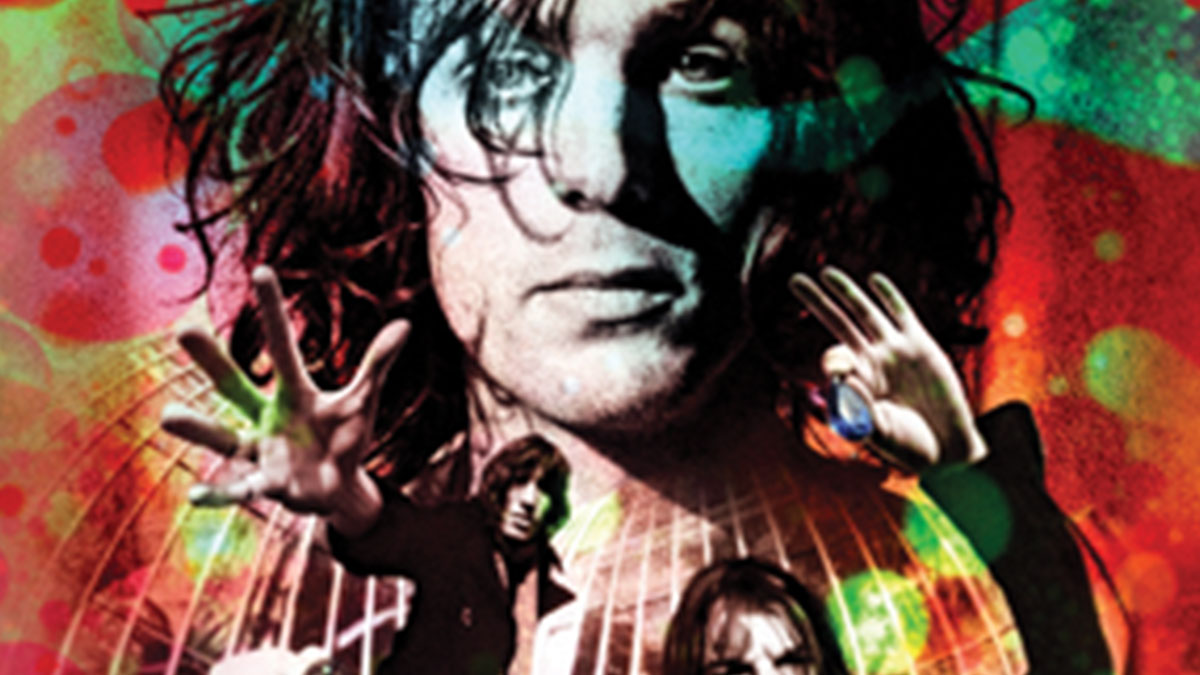
It’s understandable that fans warily approach the flood of pseudo-documentaries and biopics. Add the fact that the late Syd Barrett, Floyd’s original guitarist/leader, suffered from mental illness, and exploitation alarms are sure to go off. But this documentary handles the subject with dignity instead of sensationalism.
Interviews by longtime Floyd cover artist Storm Thorgerson with surviving members drummer Nick Mason, bassist Roger Waters, and guitarist David Gilmour, Syd’s sister, managers, schoolmates, and girlfriends lend credibility and depict Barrett as intelligent, humorous, and talented, albeit later unstable. There’s trippy footage of the psychedelic pioneers performing the instrumental “Interstellar Overdrive,” partially inspired by Love’s “My Little Red Book,” with Pete Townshend explaining that Barrett employed two Binson Echorec magnetic-disk delays.
Following hit singles “Arnold Lane” and “See Emily Play” in ’67, the rigors of gigging combined with lots of LSD resulted in disturbing songs like “Scream Thy Last Scream” and “Vegetable Man.” Fired by the band in early ’68, Barrett became one of rock’s great mysteries and recluses.
After The Madcap Laughs and Barrett solo albums and not being seen for six years, Syd shockingly turned up during a session for Floyd’s 1975 “Shine On You Crazy Diamond.” Snapshots show him heavy, balding, and unrecognizable. In 2006, the 60-year-old died of cancer. – DF
This article originally appeared in VG’s April 2025 issue. All copyrights are by the author and Vintage Guitar magazine. Unauthorized replication or use is strictly prohibited.
In the raging ’90s, The Wildhearts blasted out of Newcastle upon Tyne like some unholy melding of Guns ’N Roses, Cheap Trick, and The Replacements. Hard rock, power pop, and punk still make up their secret sauce, heard on this latest effort with original singer/guitarist Ginger Wildheart. Ben Marsden plays lead, while Kavus Torabi adds extra guitar.
It goes without saying, Satanic Rites kicks royal ass. “Eventually” is a crunchy anthem, full of heavy riffs and a madcap solo. “Scared of Glass” is another butt-moving rocker, but stays true to the Wildhearts’ credo by weaving in pop elements. Slide leads off “Troubadour Moon,” which is – shocker – another fiery jam custom-made for live shows, with dashes of Thin Lizzy guitar harmonies. Producer Jim Pinder and mixer Carl Bown are more than adept at making a studio album sound like a concert stage; this album verily blasts out of the speakers. “Hurt People Hurt People” is a gentler track, akin to mid-tempo U2. Other than that, no ballads allowed.
If you dig ’90s rawk like Goo Goo Dolls, Weezer, and Lit, Ginger Wildheart and his band have you covered. It’s fun and furious, with savage guitar tones and drum beats that never let up. – PP
This article originally appeared in VG’s April 2025 issue. All copyrights are by the author and Vintage Guitar magazine. Unauthorized replication or use is strictly prohibited.
Hailing from the Australian island state of Tasmania, Alan Gogoll is reshaping acoustic guitar before our eyes. Sure, you’ve heard artificial harmonics, but Gogoll has refined it into a fluid technique that is, quite simply, breathtaking. Heard on his latest, Lioness Lullabies, bell-like notes cascade like a waterfall over each song – truly, it’s something you have to hear to believe.
Tell us about Lioness Lullabies. It feels like a musical postcard from the past two years while I’ve been traveling from Australia to Hansa Studios in Berlin. Each of the eight songs was recorded live in a single take. There’s something special about playing a piece in one take; it preserves the raw emotion, the imperfections, and the magic of the moment. For recording, their live room has this perfect balance – resonant but not overpowering, intimate but expansive. They also have legendary and rare microphones like Neumann’s U67 and SM2, and the RCA 44, all of which brought out a beautiful depth in the guitar.
Your picking hand is positioned more-parallel to the strings than most fingerstylists. Yes, that allows me to control the harmonics more precisely and get a clearer tone. It’s something that developed naturally over time, as I found what worked best for producing the sounds I wanted. It’s certainly a trade off – the classic trap of the guitarist who wants to do it all – but I’m happy to be a one-trick pony and do that one trick to the best of my abilities.
The thumb of your picking hand is like a band – it’s playing the bass line and keeping rhythm. Talk about the different jobs your fingers do. That’s a great way to put it! I see the thumb as the metronome and bass, the index finger as perhaps the band leader for attack. My other fingers come in and out when needed. It’s like they all have their own role in a conversation, working together to create a full guitar sound.
Does using a capo improve the chiming qualities of the harmonics? I have a rule that whichever capo position I start an idea with, I keep it for the final song. A capo gives a brighter, chime-like quality, but it’s a trade off because it lowers the string tension and shortens the string length. So, all things equal, harmonics are much easier without a capo but I would say more fun with one.
What are your preferred open tunings? I actually only have one tuning and I’ve used it for a very long time. Originally, I wanted an unusual tuning so I could create my own musical identity. E-A-C#-E-B-E is the tuning that just struck me and felt like home. I believe you can now search “Alan Gogoll tuning” online and that will come up, which is cool.
Which guitar did you use on the album? I played my Åstrand, which is my dream guitar and I really can’t express how much I love it. Ted Åstrand’s luthiery work is exquisite and he’s just about to finish building a second guitar for me; it’ll be a smaller, brighter guitar to complement my OM, which I see as the orchestral guitar.
What tonal qualities are you looking for in a guitar? In terms of timber, we all know the luthier plays the largest part, but I do love my spruce and African blackwood OM for a large orchestral sound, while I have a soft spot for spruce and maple for smaller-bodied guitars. Though they’re built nearly a decade apart, they share the same piece of bearclaw-moon spruce for the tops, which was a very cool detail.
Guitar players must come to your shows and stare at your right hand. How did your cascading harmonics approach on guitar evolve? It’s funny, people always ask about my right hand, but the real work and effort happens in my left. Ever since I was a kid, I really loved harmonics – it’s like there’s a hidden instrument in the guitar, one you can access with some practice. I really love that.
Was there a moment that really upped your playing game? When I was 20, I slipped with a knife in the kitchen and injured my left hand. That forced me to only use my right hand for some time, so I started looking at how many harmonics I could do over the soundhole. Once my fretting hand healed, I started translating what I’d been doing with my picking hand to my fretting hand, and the rest is history. It’s exciting because the guitar really does seem to have infinite possibilities. There’s still so much undiscovered. – Pete Prown
This article originally appeared in VG’s April 2025 issue. All copyrights are by the author and Vintage Guitar magazine. Unauthorized replication or use is strictly prohibited.
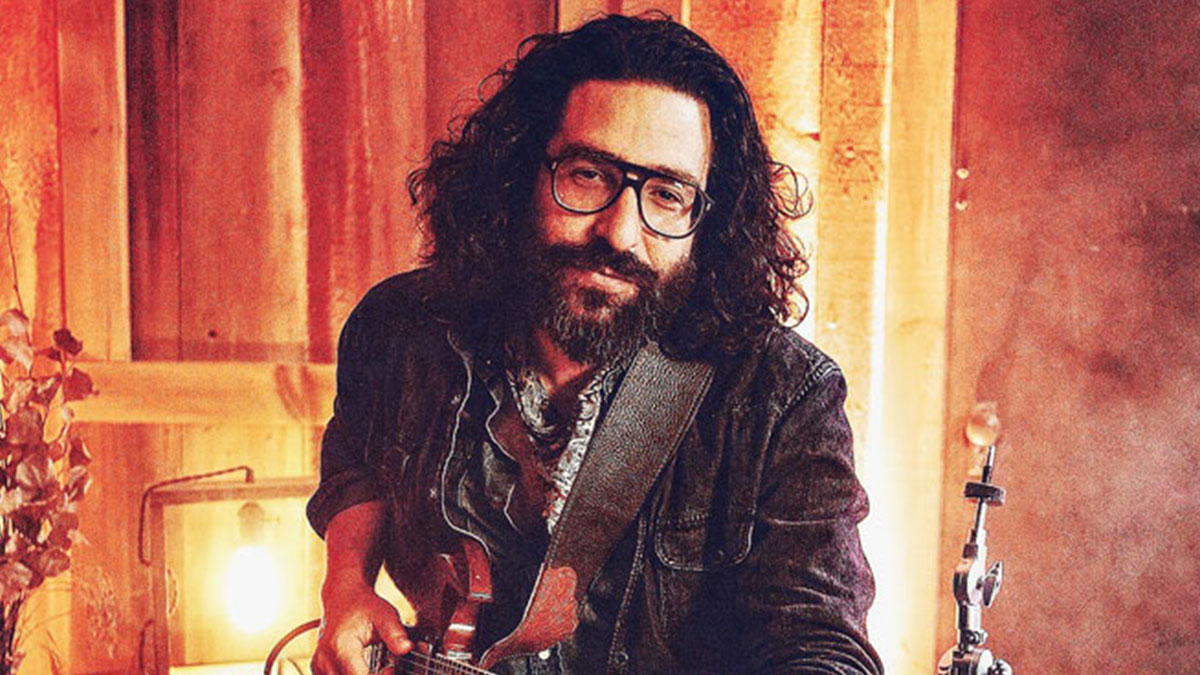
“I’m always trying to do things I haven’t done before,” says guitarist/banjoist Eric Lindberg, who has toured and recorded for a decade with wife Doni Zasloff as the bluegrass duo Nefesh Mountain.
“A lot of folks know us as a bluegrass/mostly acoustic band, but I really have been getting back into my personal roots – electric, jazz, rock, and blues from my formative years.”
Those broader horizons and the expanded Nefesh Mountain Band with keyboard, mandolin, bass, and drums dominate their double album, Beacons. Disc one is Americana originals and amplified playing, while disc two’s modern acoustic bluegrass features A-list guest pickers. Joining mandolin ace Sam Bush and dobroist Jerry Douglas are banjoist Rob McCoury, fiddler Stuart Duncan, and guitarist Cody Kilby.
Growing up in Brooklyn, Lindberg explored his parents’ wide-ranging record collection including the 1996 David Grisman-Jerry Garcia bluegrass collaboration Shady Grove, which he calls “a big one for me.” Discovering his dad’s Pat Metheny CD made the guitarist “one of my North Stars.” Bill Frisell and Jon Scofield later became favorites.
Studying classical guitar at 10, his first guitar was a nylon-string that was soon augmented by a Harmony 335 copy played through a tiny solid-state Marshall.
His uncle, Tim, who lived in Georgia, was a guitarist with impressive gear of his own.
“We would pick Allman Brothers tunes,” Lindberg recalls. “That’s probably why I love what I love today – that mixture of the city and the south. Those two sides of me.”
Discovering Bela Fleck and the Flecktones in high school “…reminded me of a bluegrassy version of the Metheny group, though they’re nothing alike.”
Fleck’s Bluegrass Sessions: Tales from the Acoustic Planet Vol. 2 introduced him to Bush, Douglas, Duncan, and another major guitar influence – Tony Rice.
Lindberg finally embraced five-string banjo in 2013, taking lessons from Tony Trischka. That led him to Doc Watson, Clarence White, Norman Blake, John Hartford, Flatt and Scruggs, Bill Monroe, and the Stanley Brothers, as well as modern acts like Nickel Creek. At Rutgers University’s Mason Gross School of the Arts, he focused on music and continued studies with jazz-guitar great Vic Juris, which started in high school. Along with jazz, Juris encouraged his interest in bluegrass.
“Vic introduced me to certain Tony Rice records,” he said. “I was lucky I had him as a mentor.”
Beacons includes his heartfelt Rice homage “Man of Manzanita.”
Lindberg and Zasloff, who reside in the New York area, created the album there and in Nashville.
“I wrote the songs starting in January, 2024, and we did all but three in Nashville that April. We brought our band down for a few days, then Sam, Jerry, Stuart, and all my heroes came the last three days.”
Lindberg’s gear blends new and old. He acquired a 1981 ES-175 while studying with Juris – a factory second with a small knot in the wood. “Vic said it was one of the better ones he’d played.”
On the bluegrass disc, he used only a custom-made Preston Thompson acoustic with Madagascar rosewood he says is “really beautiful.” He also used his Deering five-string banjo.
For the Americana disc, he used two electrics, one being a ’52 Tele reissue he’s had for 25 years. Before meeting Zasloff, he used it on USO tours in the Middle East. “Mother” features him soloing using the neck pickup; engineer Brendan Bell used dual compression so it “…doesn’t sound super Tele.”
“Milestoned,” by contrast, is super Tele. After college, he says, “…even though I was playing a lot of jazz, I was really into Brett Mason, Johnny Hiland, Brad Paisley, and of course James Burton and Danny Gatton. I was really trying to do the Tele thing. It’s fun to step back in, and I’m playing a lot of that stuff live.”
“Keep Your Lamp Trimmed and Burning” is his Custom Shop ’64 SG with a Murphy Lab finish, and he’s especially drawn to its thick neck shape.
After Tim passed, he visited his aunt and returned with his uncle’s ’65 SG Junior and an ’81 Strat.
“I’ll see if I want to take the ’65 on the road,” he said. “It’s a pretty wonderful-sounding old piece of wood.”
For the Americana tracks, he used a modded Fender Princeton, a ’90s Deluxe Reverb (both borrowed from a friend), and a new Magnatone.
With the Nefesh Mountain Band on tour through ’25, Lindberg and Zasloff are looking to their next record, as Lindberg reflects on the band’s voyage.
“We’ve come a long way from that first record to where Beacons is now.” – Rich Kienzle
This article originally appeared in VG’s April 2025 issue. All copyrights are by the author and Vintage Guitar magazine. Unauthorized replication or use is strictly prohibited.
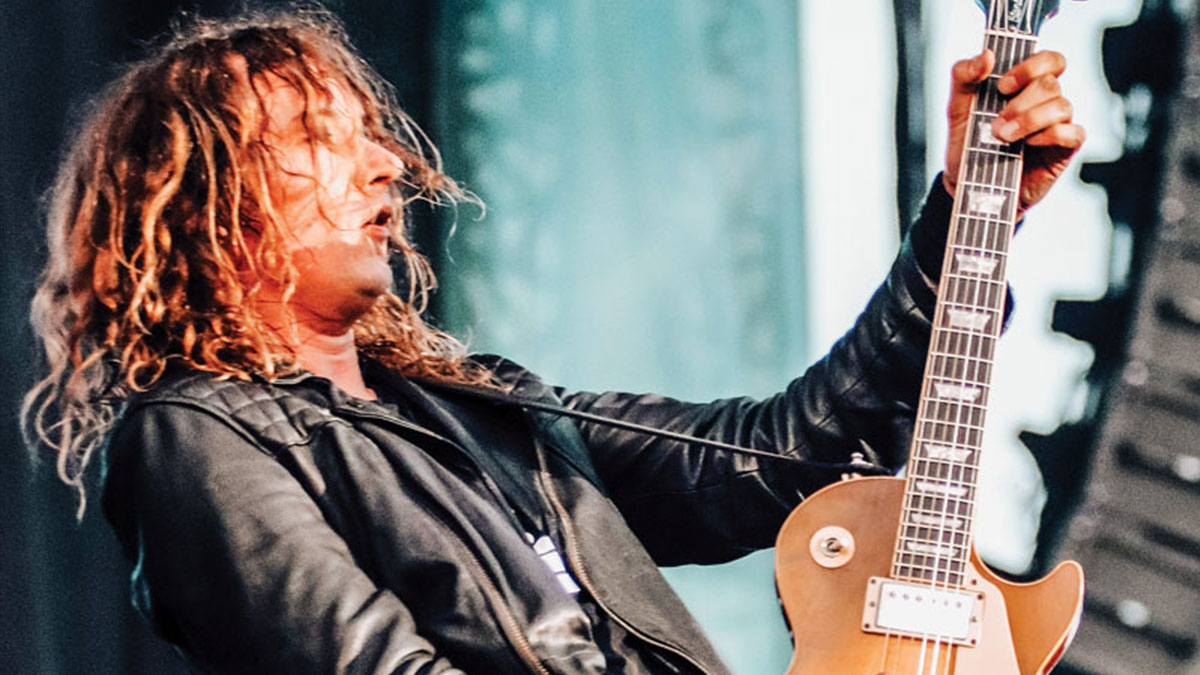
When The Darkness roared out of England with its 2003 debut Permission to Land and the hit “I Believe in a Thing Called Love,” the music world was slapped across the face. The band reminded people that melodic hard rock steeped in ’70s influences was supposed to be catchy, fun, and sometimes outrageous. Guitarist Dan Hawkins, vocalist/guitarist Justin Hawkins, bassist Frankie Poullain, and drummer Rufus Taylor have just released Dreams on Toast, The Darkness’ eighth studio album.
Vintage Guitar caught up with Dan Hawkins.
How did the songwriting work on Dreams on Toast? Quite often, I have written the music, Justin the lyrics and melody, but we are all together when it happens, and soar musically and lyrically off each other, so even if Frank and Ru haven’t contributed chords, melody, or lyrics, we still split the songwriting contributions. Rufus many times has played a drum beat that has informed a riff or chord progression of mine.
Has the way you all write changed dramatically over time? We are pushing each other to come to writing sessions with pre-formed ideas. We have all contributed solo contributions to this album with each of us taking a turn to be the vocalist on our offering.
You produced Dreams on Toast and produced or co-produced previous albums. What goes into that decision, and is it easy or difficult to step back and just be a guitarist? Producing has been an obsession of mine since a young age. I wanted to go to London when I was 17, with the aim of being a sound engineer, but things didn’t quite go to plan. I built a commercial studio in Norfolk when the band got big and had many established acts record there.
From the start of The Darkness, I was in the role of producer. I wasn’t credited, but I produced the first album with Pedro Ferreira. Halfway through, Frankie thought I was taking too much control away from the band, so I stepped down. But when it came to dishing out credits, Pedro conveniently forgot that I was his co-producer for half of the album. I knew it was wrong at the time, but didn’t say anything, as I just wanted the band to do well and not rock the boat.
I’ve been on a mission to prove myself as a top producer and not rely on engineers or mix engineers ever since! I have produced everything I’ve recorded, apart from our Pinewood Smile album, which was produced by Adrian Bushby. It was magnificent fun and Adrian is amazing, but it was just for one album, as I’d had a baby and was exhausted. It was really fun just being a guitar player, though!
Dreams on Toast has a variety of styles. “Rock and Roll Party Cowboy” and “I Hate Myself” rock out. “Hot on My Tail,” with its acoustic-guitar strumming and catchy piano, is like country rock. The straight pop influences are evident on “Don’t Need Sunshine” and “The Longest Kiss.”
My agenda as producer was not to make music for our audience, but to follow the song no matter what style it was. We had upward of 70 songs on the cutting room floor before we even thought of entering the studio. The (Beatles’) White album was quite an influence on us this time – the freedom to explore rather than supply our fans with more of the same.
A new documentary, Welcome to The Darkness, covers the band’s highs and lows. How do you think it turned out? It was a massive pain in the arse. Cameras on us for seven years! I don’t really think it came across, how much fun we have as a band. It was more about picking out the drama. Still, director Simon Emmett did a great job. I think of it more like a wildlife documentary. We didn’t have a say in much.
What guitars did you play on Dreams on Toast? I used a 2000 Les Paul Standard, a 2024 355 – my new fave – a ’64 Epiphone Casino, and Atkin and Brook acoustics. My 355 is a beautiful guitar I got from the Gibson Garage last year. It sounds quite aggressive but with so much personality. I can’t wait to play it live on the next tour. Justin kept nicking it for solos, as it just sings! It’s the sound of this album for sure. – Bret Adams
This article originally appeared in VG’s April 2025 issue. All copyrights are by the author and Vintage Guitar magazine. Unauthorized replication or use is strictly prohibited.
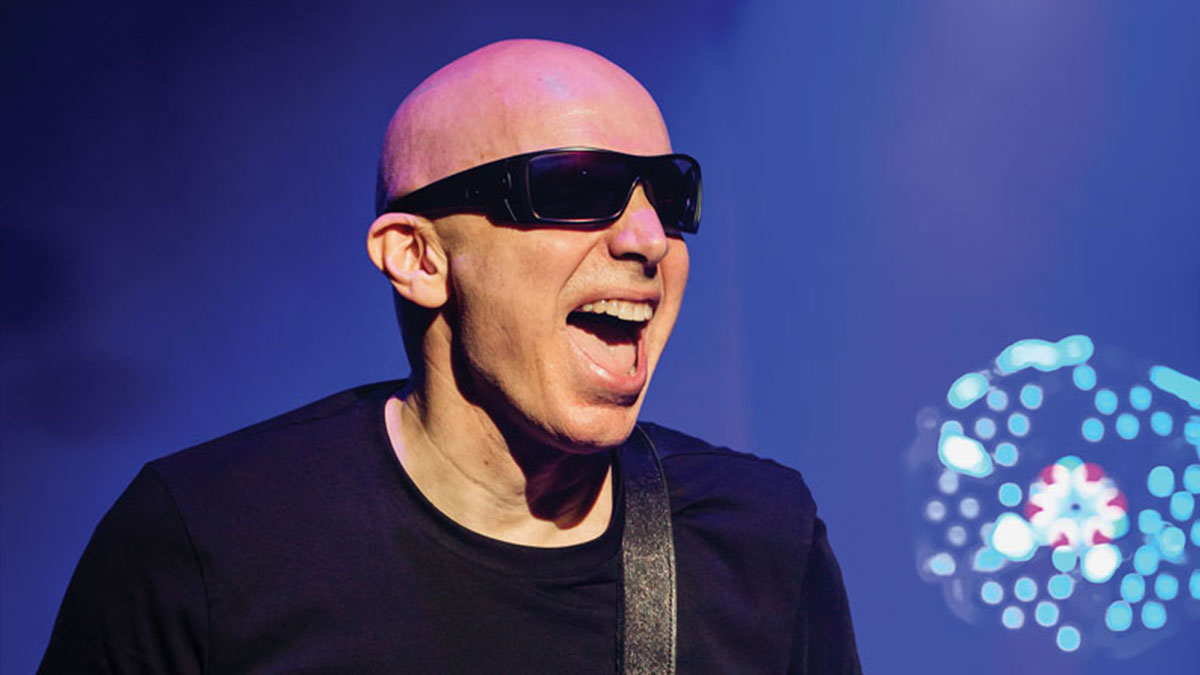
The hardest-working guitarist in show business, Joe Satriani recently wrapped up a successful Van Halen tour, a G3 Reunion tour, a live album, a residency in Las Vegas with Sammy Hagar, and is now supporting an album co-written with Steve Vai. Does Satch ever rest?
The G3 Reunion Tour sent everyone back to the guitar woodshed. It was such an unbelievable turn of events that led us to be able to do that (laughs). Everyone changed everything they were doing at the last minute so this could come together. Everyone liked the idea of simply re-doing exactly what we did back in 1996. Steve opened the show, Eric would be second, and then we picked crazy cover songs to jam to. It was intense, but we pulled it off. It was a beautiful reunion.
“Big Bad Moon” is an excellent choice for the single. We weren’t thinking of doing a live album. We were concentrating on the tour. Then, EarMusic said “We’d love to have a live album!” I thought it would be a fun opportunity to release “Big Bad Moon.” Something I don’t do very often is sing, if you can call it that (laughs). Bassist Bryan Beller said that particular performance of “Big Bad Moon” had swagger to it. It was something we did as a unit; very often, people overlook that and see only the technical or production elements. On that song, the band came together in a very rock-and-roll way. I was proud of the band and how they played with me. I don’t know how they follow me sometimes, but they did an amazing job (laughs).
What resonates for you after performing so many Van Halen songs? What a joy it was to play nothing but hit songs for two and a half hours (laughs). It was mind-blowing! It was rhythm guitar with a couple of 16-bar solos – the polar opposite of my show, which is melodies and solos non-stop. Part of it was a relief, physically. I had a big stage and really enjoyed being a part of a band and not having to front. And, it’s good-time music. I can only think of one song that was slightly moody – “The Seventh Seal.” The rest was upbeat. We played outside, and the audience loved hearing the music. The Van Halen OGs loved hearing Michael Anthony and Sammy Hagar doing their stuff.
Was it challenging to find the right rig? It was a crazy journey, figuring out what gear to play so I could properly represent the decades of Eddie and his development. The guitar sounds from “Ain’t Talkin’ ’Bout Love” to “Panama” to “Summer Nights” or “Judgement Day” are so completely different. You wouldn’t want to walk onstage and step on some modeling thing where you change your sound. It would drive you nuts.
What did you come up with? I wound up focusing on Live Without a Net, from 1986. That was Eddie playing Marshalls with a bit of stereo chorus. They were still doing a lot of Roth-era material. I thought, “That’s the way to do it. Go onstage with one really big sound and have a party!” I worked with Dylana Scott at 3rd Power Amplification to cover that – chimey for the rhythms, enough gain but still with that slinky, sexy, exciting kind of single-note sound that Eddie was always getting.
It was particularly hard because I don’t play like Eddie. The more I got into it, the more I realized how much I don’t play like Eddie and how much I avoided learning his style because I didn’t want to copy him. If I learn the beginning of “Mean Street,” I’ll write songs that sound like that. So, I had better just be a fan and just listen to it. By the time we played, the audience was so appreciative. They saw Sammy and Mike giving their all every night. We did everything we could to represent this body of work as best we could.
Edward played in a very unique way. Sometimes, I would find myself standing still onstage, forgetting to run around, staring at my hand, and going, “This is really cool (laughs)!” Eddie had a way of always making it sound fun. I was always amazed at that.
What can fans expect from you and Steve Vai on the Surfing With The Hydra Tour? We are writing and recording our album. It’s progressing, it’s crazy, and it’s all over the place with beautiful, crazy songs. We’ll start rehearsing with a new band and hit the road. We’ve never done anything like this before. – Oscar Jordan
This article originally appeared in VG’s April 2025 issue. All copyrights are by the author and Vintage Guitar magazine. Unauthorized replication or use is strictly prohibited.
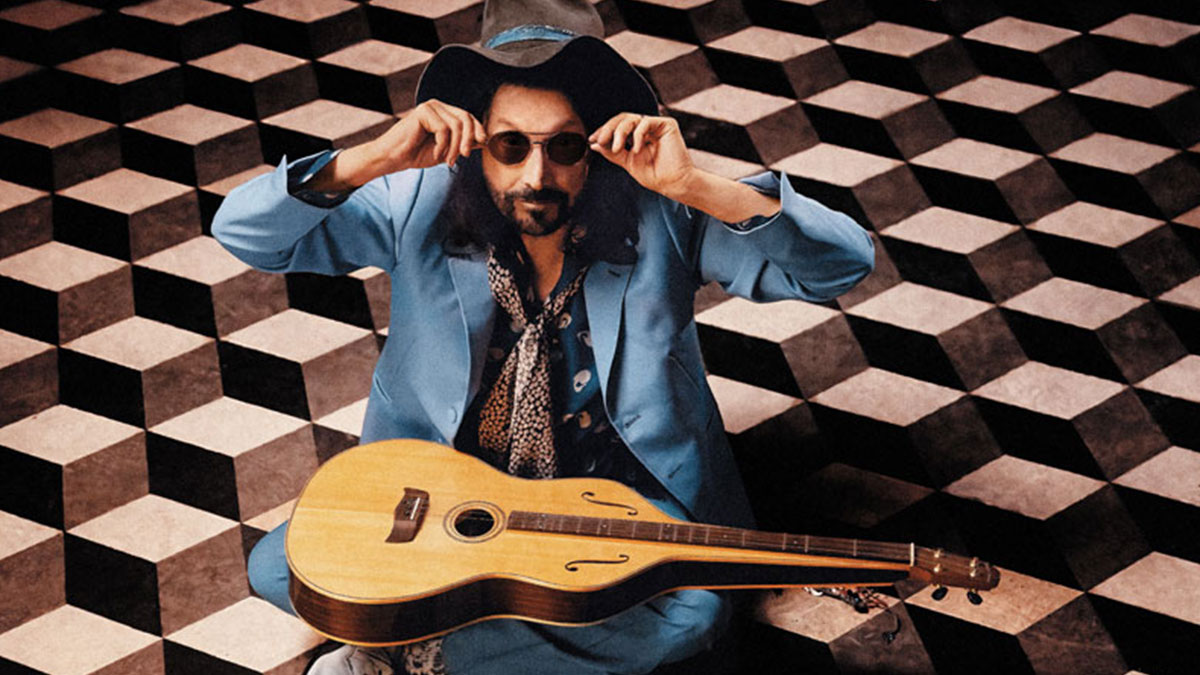
Mike Campbell is one of the most-heard guitarists on earth thanks to his work in the legendary Tom Petty and the Heartbreakers and their catalog of hit singles (“American Girl,” “I Need to Know,” “Refugee,” “The Waiting”) and certifiably classic albums (Damn the Torpedoes, Hard Promises). He has also written for and played with many others, notably Don Henley’s hit “The Boys of Summer.” After Petty’s sudden passing in 2017, Campbell formed his own band, the Dirty Knobs. His latest project is an autobiography, Heartbreaker: A Memoir. Campbell’s life is a remarkable story, from childhood poverty to the pinnacle of fame and professional respect.
Several times in the book you refer to yourself as a quiet and shy person. Given that, was it difficult to talk about yourself, and therefore challenging to write the book? It wasn’t, because the shy, insecure guy was much younger. I’ve gained a lot of confidence now that I’ve gotten older, so I found it very easy to talk about things. As my wife puts it, “You’ve become very chatty in your old age!”
Where did that confidence come from? Well, success gives you confidence. Once we started making records and they started doing well, you start to feel a little more confident about yourself. I came out of my shell slowly.
Was this the first time you’d been asked to write a book? Yeah. Writing a memoir never crossed my mind. In my wildest thoughts, I might someday like to write a book of fiction or something. But a friend of mine, Jaan Uhelszki, knew a writer who was interested in doing a book about me. No one asked before. Ari Surdoval is his name, and I really liked him and he was really keen to do it. They talked me into it, and I’m glad they did.
Petty doesn’t always come across very well. Well, the book is truthful, and every band should have a Tom Petty. If you want to succeed, as a leader you sometimes need to be a little hard-edged to get things done. In the book, I touch on that edge he had, which he probably got from the way his father treated him growing up. He had a determination and drive that none of us had. Without somebody in the band with that quality, you probably won’t succeed.
No, he wasn’t a perfect person. People may read it and think, “There were some dark spots…” but you could say that about anybody. There’s also a loving, sweet, gentle human being in there. That was my thread – bands are delicate, and someone has to lead the band or it’ll fall apart. Fortunately, we had Tom, who always stood by the band. He could have gone solo, but he loved the band and he fought for himself, but he also fought for us.
You talk a lot about recording demos. When you’re writing, it’s free. You’re with the muse and just accepting it. You’re not thinking, “This has to be a record…” or “This sound has to be perfect.” You’re about the creative flow and the gift that’s coming to you. When you’re in the studio making a record, it’s a different energy – there’s pressure to pay attention to details. Sometimes you get lost in the details and forget the spark. But demos capture the creative passion in a song, unencumbered by expectations. You go with it, put it down, and have fun.
We had to take demos into the studio and try re-creating them. The game was called “Beat the Demo.”
You discuss influences like Bob Dylan, George Harrison, Roger McGuinn, and others, and the fact you worked with them. Have you accepted that you’re now an influence, too? In some ways, I have, because people tell me, or they say, “We played ‘Here Comes My Girl’ at our wedding.” The songs meant something to people. I know what it’s like to be enamored with someone else’s music, such as my heroes that I’ve worked with. I know that feeling, and I try to respect that when someone gives me a compliment. I get this feeling sometimes like, “How did I get here? Why me? How did this happen to me? Why am I so lucky?” I’ve had a very charmed life. – Bret Adams
This article originally appeared in VG’s April 2025 issue. All copyrights are by the author and Vintage Guitar magazine. Unauthorized replication or use is strictly prohibited.